Table Of Content
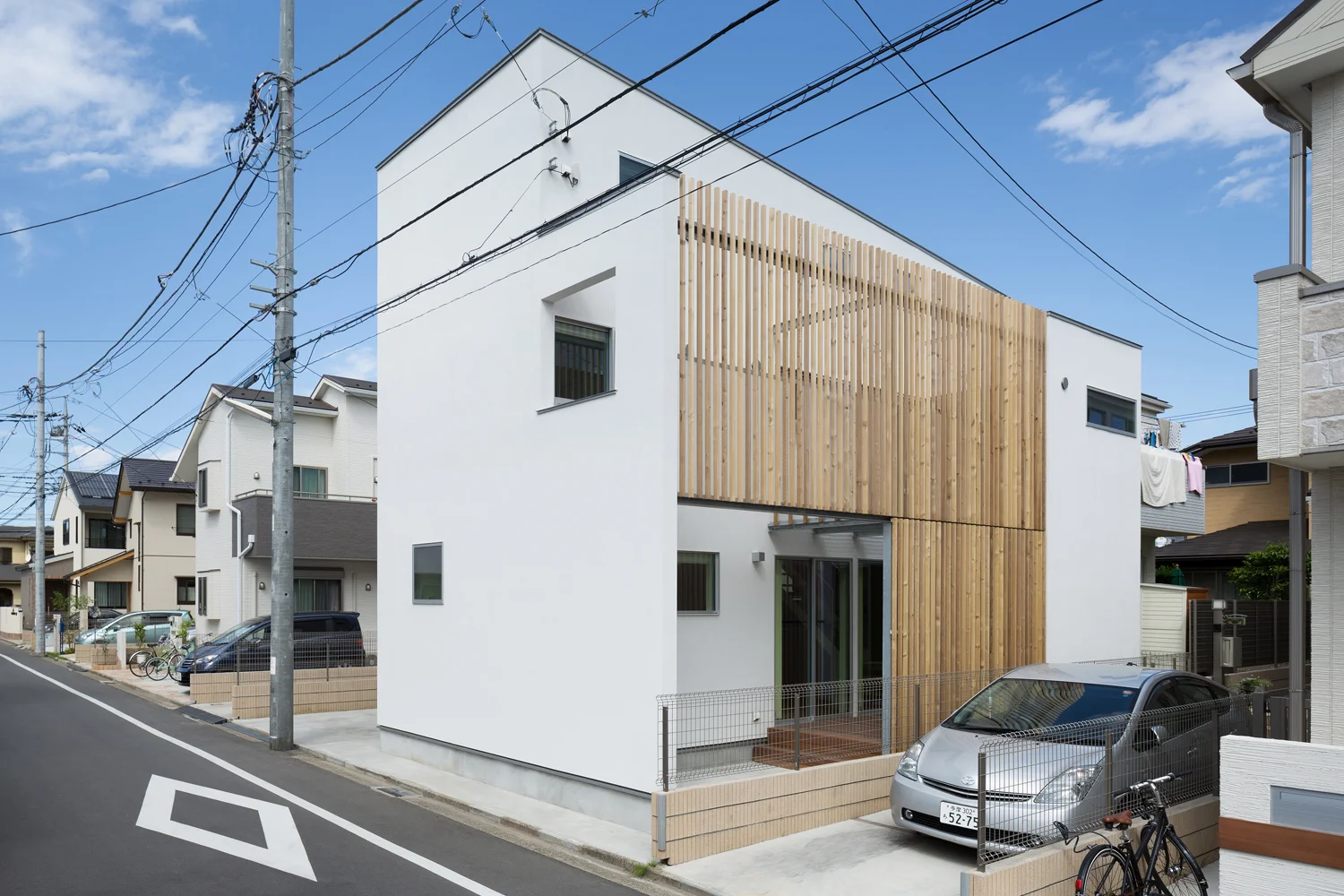
The region sees a drastic temperature swing of 60°C between summer and winter, and so the house has been designed with this mind, featuring only small openings and plenty of insulation. The trust a client puts in an architect is directly reflected on the finished building. Try to take control of every tiny little detail and you will probably end up with a lot of good intentions, but a mixed bag of half-baked ideas.
Styles and Interiors of Traditional Japanese Houses
The agarikamachi is a step higher than the tataki floor and leads directly to the main entryway. You must take your shoes off at this point, leaving them on the tataki floor before venturing any further. This process ensures that no dirt from the outside comes into the house interior. There are tiny homes that would be a claustrophobic’s nightmare and mansions that require an army of housekeepers for upkeep. But a traditional Japanese minka would have these rooms on the list below, despite differing sizes, geography, and climate.
A look at the White House state dinner for Japan's prime minister in photos
Maggie Rogers, The Japanese House added to 2024 AMP lineup - Fayetteville Flyer
Maggie Rogers, The Japanese House added to 2024 AMP lineup.
Posted: Thu, 22 Feb 2024 08:00:00 GMT [source]
A secondary school teacher of Japanese and English who spent many years living and working in Japan, Judy now lives on a small farm in rural New Zealand and remains a frequent visitor to Japan. The kamoi are the lintels above openings for sliding fusuma or shōji door panels. In sections of wall without any door openings, decorative horizontal timbers called tsuke-kamoi are added to continue the line of the kamoi beams right around the room. The exterior walls of the house that align parallel to the ridgeline are known as hira walls, while the shorter end walls under the gables are called tsuma walls.
Seasonal Differences in Japanese Traditional Houses
Give the architect the freedom to experiment around a good brief and your chances of ending up with something unique, pushing the boundaries of what architecture can do, are much higher. They’re usually located on the engawa, and they act as a transition space between the exterior and interior of the house. This roof style is most often seen on Japanese farmhouses but will sometimes be seen in other styles. This style roof only has two sides, branching from a ridge in the middle and sloping outwards to cover the walls of the house. When the tatami mats are arranged, the seam of two parallel tatami mats will line up perfectly in the center of a post, and then just the corners of the mats will need to be cut out to go around the post. There are also different post and beam support styles in traditional Japanese houses.
Video: Japanese House Designs & Plans
Today, we announce several new strategic initiatives to further advance our Alliance. More effective U.S.-Japan Alliance command and control will strengthen deterrence and promote a free and open Indo-Pacific in the face of pressing regional security challenges. We call on our respective defense and foreign ministries to develop this new relationship through the Security Consultative Committee (our security “2+2”). In support of this vision, we also reaffirm our goal to deepen Intelligence, Surveillance, and Reconnaissance cooperation and Alliance information sharing capabilities, including through the Bilateral Information Analysis Cell. In this new era of U.S.-Japan cooperation, we recognize that global events affect the security and stability of the Indo-Pacific, and that developments in our shared region reverberate around the world. We are therefore working together, across all domains and at all levels, to build a global partnership that is fit for purpose to address the complex, interconnected challenges of today and tomorrow for the benefit of our two countries and the world.
We can build a wing or the core of a house—usually places where you will hang out, spend a lot of time. The rest of the house can then be built using cheaper modern construction techniques. One doesn’t necessarily need Japanese laundry rooms, storage rooms or garages.
The Scoop Landscape House is a new project by Not Architects Studio, a side project set up by Tetsushi Tominaga and Lisa Ono, together with Aoi Nahata. Ono’s concept design for this 101 sq m Japanese house was to create a space that ‘scooped up’ the best views and fragments of cityscape surrounding the modest lot in Ota City, a residential district just south of Tokyo’s city centre. On the secluded island of Ikema, part of the Okinawan archipelago in the East China Sea, 1100 Architect has recently completed a cliff-top home looking out to sea. Built of concrete to withstand extreme weather, the architects detailed the home with traditional Japanese materials to soften its edges. The couple who commissioned the house, an art dealer who is originally from Ikema and her husband, an engineering entrepreneur, reside permanently in Naha, Okinawa island, and had always dreamed of having a retreat in Ikema.
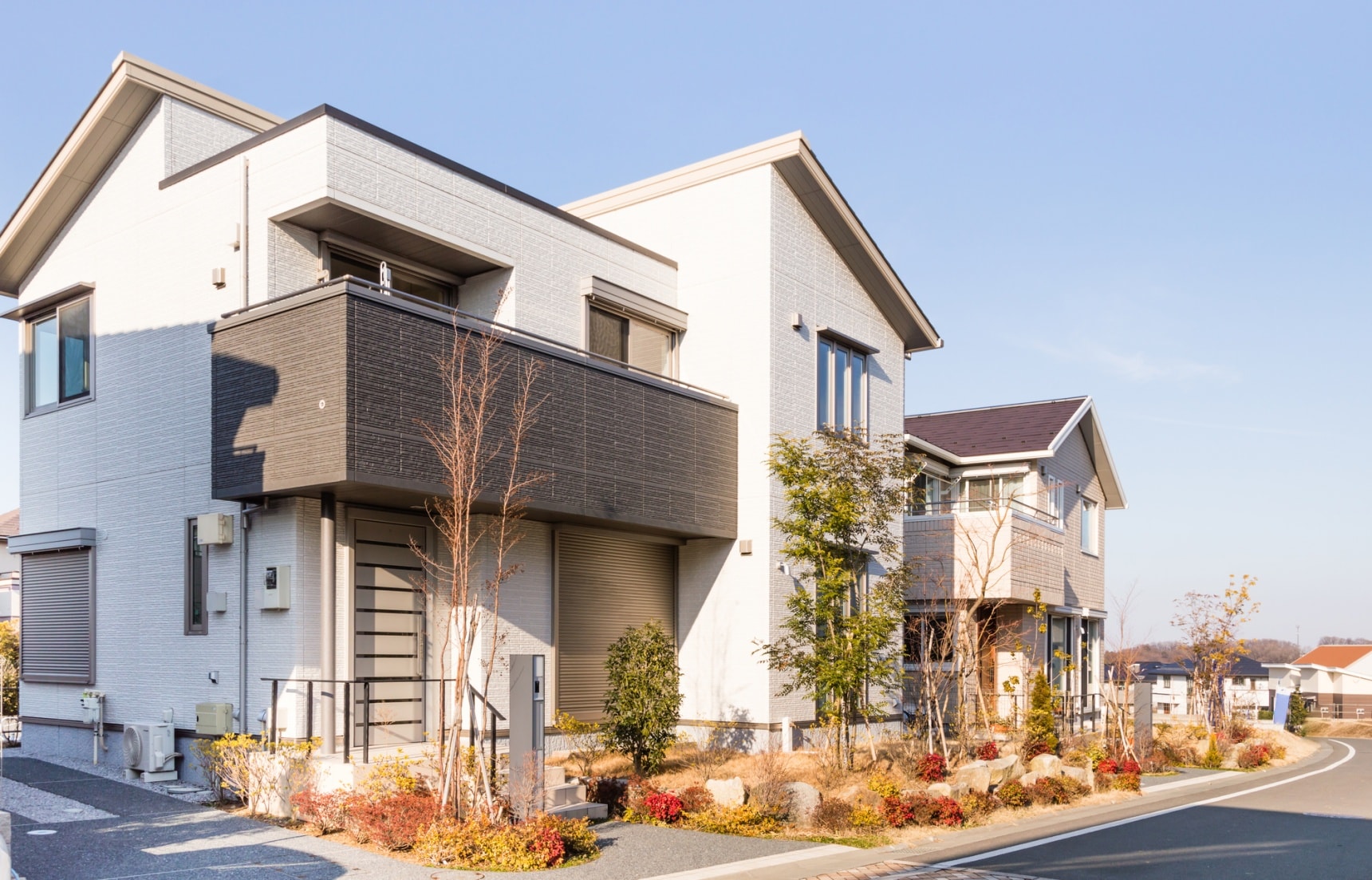
Lastly, it provides functional and practical living spaces for those who choose to live in them. Unlike many common living spaces in the west, traditional Japanese housing takes a slightly different approach. Not only does the design of a traditional Minka take into consideration the genuine charm but also the functionality of everyday life, but now and for future reconstruction. We continue to stand together in firm opposition to Russia’s brutal war of aggression against Ukraine, its strikes against Ukraine’s infrastructure and the terror of Russian occupation. We are committed to continuing to impose severe sanctions on Russia and provide unwavering support for Ukraine. Together, we reiterate our call on Russia to immediately, completely, and unconditionally withdraw its forces from within the internationally recognized borders of Ukraine.
Traditional Japanese Homes (Noka, Gyoka, Sanka or Machiya)
It's also worth noting that local people don't need to be paid per diem and travel expenses. Tatami mats are definitely better for the environment compared to western-style mattresses made from synthetic materials. Due to the significantly less cushioning, tatami mats will feel much harder to sleep on than western-style mattresses.A tatami mat has just enough cushioning that it won’t feel like sleeping on a hardwood floor. But due to its inherent qualities, you cannot sleep in the same positions as you would on a mattress. Sleeping on a tatami mat takes some getting used to, but in the end, it is better on your back.
In the times of traditional Japanese houses, there was no air conditioning or heaters, summers were hot and humid while the winter months were cold and dry. During the summertime, houses were susceptible to the build-up of toxic mold so raised floors and open spaces ensured proper ventilation. The walls of traditional houses were rather thin to withstand frequent earthquakes so it would get very cold in the winter, resulting in the need for 囲炉裏 Irori “Hearth”, 火鉢 Hibachi “Fire bowl”, and 炬燵 Kotatsu. As we pursue our shared vision of a free and open Indo-Pacific, we continue to build strong ties between key, like-minded partners in the region. The United States and Japan also remain committed to advancing trilateral cooperation with Australia to ensure a peaceful and stable region. We continue working together with partner countries to make concrete progress in strengthening the international financial architecture and fostering investment under the Partnership for Global Infrastructure and Investment.
There might be a built-in desk (tsukeshoin) facing the wall in this room, another hangover from the samurai's house. Illustrator Yuriko Aso’s drawings for this article were modelled on the Kobayashi Family Residence, an old farmhouse on display in Kawagoe-dō Ryokuchi Kominka-en, a tract of green space in Tokyo’s Tachikawa City. Built in 1852, the farmhouse was lived in until 1988, although some renovations had taken place, including the replacement of the thatched roof with tiles, and the addition of aluminium-framed windows. The home was dismantled and moved to its present site, where it was reassembled and restored to its original state. Shōji are translucent sliding panels that cover door and window openings, offering privacy while allowing the light to pass through. They consist of a wooden lattice framework covered on one side with stretched shōji paper.
These items were often made of unusual wood or bamboo and might be made more elaborate in design and decor using lacquer and gilding. Valuables such as a sword or jewellery were kept in chests, sometimes, according to the ancient Ainu tradition (Japan's indigenous population), in the north-east corner of the house where the guardian spirit of the house, Chiseikoro Kamui, was thought to dwell. The sitting room (zashiki) was first seen in the homes of samurai who, as members of the upper class, were required to give audiences to their vassals and officials. For the same reason, one area of the room's floor may be slightly raised (jodan-no-ma).
Photography + Review: The Japanese House and quinnie - getalternative.com
Photography + Review: The Japanese House and quinnie.
Posted: Wed, 13 Dec 2023 08:00:00 GMT [source]
These were especially popular in towns and cities from the 17th century CE and typically showed urban scenes (especially related to leisure activities), famous scenic spots, and actors. Finally, purely decorative ornaments were used sparingly in the home, but a fine example of porcelain or lacquerware might be displayed. Ornaments and sometimes an arrangement of flowers or an incense burner were placed on shelves which were typically a staggered pair (chigaidana). Japan had a very stratified class system and architecture was one of many ways authorities used to maintain the status quo and reinforce the idea that everyone has their correct station in life. There were specific sumptuary laws which prohibited commoners owning houses of the style favoured by samurai, for example. The samurai class were much impressed with the Zen-influenced architecture of Buddhist temples, and they imitated the austerity and minimalism of this in their own homes.
The architects had previously completed another commission for the couple in Naha City, so they were familiar both with native construction methods, materials available and the traditional, yet contemporary tastes of their clients. ‘They were primarily interested in a clean modern aesthetic, and the choice of cast concrete is a stereotypical construction method in Japan because of typhoon and earthquake requirements’, says Juergen Riehm, lead architect on the project and partner at 1100 Architect. The project offers little clue of its multitasking goings on from the street, hidden behind its minimalist architecture and geometric façade made of charcoal grey Galvalume steel walls, grey natural-granite retaining walls, and resin wood louvres.
The reason was to make the guests enter the tearoom on their hands and knees to make them leave their swords and egos behind. Japanese paper (washi) is pasted to the lower portion of the walls to protect the guests’ kimonos from the mud plaster on the walls. Over the past several years, Washington has built a series of multilateral security arrangements like these in the Asia-Pacific region. Although U.S. officials claim that the recent mobilization of allies and partners is not aimed at China, don’t believe it. Indeed, Mr. Kishida emphasized in a speech to Congress on April 11 that China presents “the greatest strategic challenge” both to Japan and to the international community.

Before delving into varying floor plans, it’s critical to understand the importance of tatami mats in a Japanese home. Maison Aki-Shima was built in 2004 in Akishima, Tokyo, by architect Taira Nishizawa. Unlike homes in many Western nations, Japanese residences depreciate rapidly in value over time. As argued by economists Richard Koo and Masaya Sasaki in a 2008 report, a typical home loses all economic value within 15 years of being built. Houses, too, have a limited physical lifespan – an estimated average of twenty years for wooden buildings, and thirty for concrete structures. Kōshi mado are windows with a lattice made from thin strips of wood arranged within a timber frame.


No comments:
Post a Comment